
This fear is spreading fast among small business owners, and it makes sense why.
You watch someone ask ChatGPT for a recommendation. It gives a complete answer — names a business, describes what they do, maybe even compares a few options. The person never clicks a link. Never visits a website. They just get their answer and move on.
If that's the future, why bother having a website at all?
It's a reasonable question. But it's based on a misunderstanding of where AI is getting those answers in the first place.
The Fear
The worry goes something like this: if AI can summarize everything, then people will stop visiting websites. And if people stop visiting websites, then investing time and money into a website is a waste. Some business owners are already wondering if they should shift their attention entirely to social media, or just let their site sit as-is and focus elsewhere.
This line of thinking treats websites as if their only purpose is to attract clicks. And in a world where AI intercepts the click, that purpose seems to be disappearing.
But that's only half the story.
Where AI Gets Its Answers
Here's what most people aren't thinking about: AI doesn't generate its answers from nothing. It draws from sources. And the most important sources it pulls from are websites, articles, documentation, directories, and other trusted content published online.
When AI recommends a business, it's doing so because it found clear, credible information about that business somewhere on the web. Often, the primary source is the business's own website. Other times, it's pulling from a combination of the website, directory listings, review sites, news articles, and industry publications.
Take away the website, and you remove one of the richest, most detailed sources of information AI has about your business. You're not avoiding irrelevance — you're guaranteeing it.
The Shift You Need to Understand
Websites aren't becoming irrelevant. They're changing roles.
For years, the purpose of a website was to be a destination. You drove traffic there through ads, SEO, or social media. People arrived, browsed around, and hopefully took action — called you, filled out a form, made a purchase.
That model isn't going away entirely, but a new role is emerging alongside it. Your website is becoming a knowledge source — a place where AI goes to learn about your business so it can represent you accurately when someone asks a question.
This is a subtle but important shift. It means your website needs to do two jobs now. It still needs to serve human visitors who land on it. But it also needs to clearly communicate who you are, what you do, and why you matter to systems that are reading it for information — not browsing it for a visual experience.
What This Means for Your Website
If your website is heavy on images, light on text, and built around vague brand statements, it might look beautiful to a visitor. But to AI, it's nearly empty. There's nothing to learn from, nothing to quote, nothing to reference when someone asks for a recommendation in your space.
The websites that are fueling AI answers right now tend to share a few things in common.
They say what the business does in plain terms. Not "empowering brands to thrive in a connected world." More like "we design and manage social media campaigns for independent restaurants." AI can work with that. It can't do much with aspirational slogans.
They cover their services in detail. Each service has its own clear description. Not a dropdown menu with one-word labels — actual explanations of what the service involves, who it's for, and what the outcome looks like.
They include context that builds credibility. Case studies, client results, service area details, industry specializations, founding story — all of this gives AI more material to draw from and more confidence that this is a real, active, trustworthy business.
They keep information current. A website that hasn't been updated in three years tells AI that the information may be stale. Regular updates — even small ones — signal that the business is active and the content is reliable.
The Bottom Line
AI isn't replacing your website. It's reading it. And what it finds there directly shapes whether your business gets mentioned, how it gets described, and whether it gets recommended.
The business owners who pull back from their websites right now are going to wonder in a year why AI never mentions them. The ones who lean in — who treat their website as a living, clear, detailed knowledge source — are going to be the ones AI can confidently talk about.
Your website still matters. It might matter more than ever. The difference is that your most important new visitor doesn't have eyes.
This article is part of the SEEN Framework, a system designed to help small businesses become recognizable in AI search.
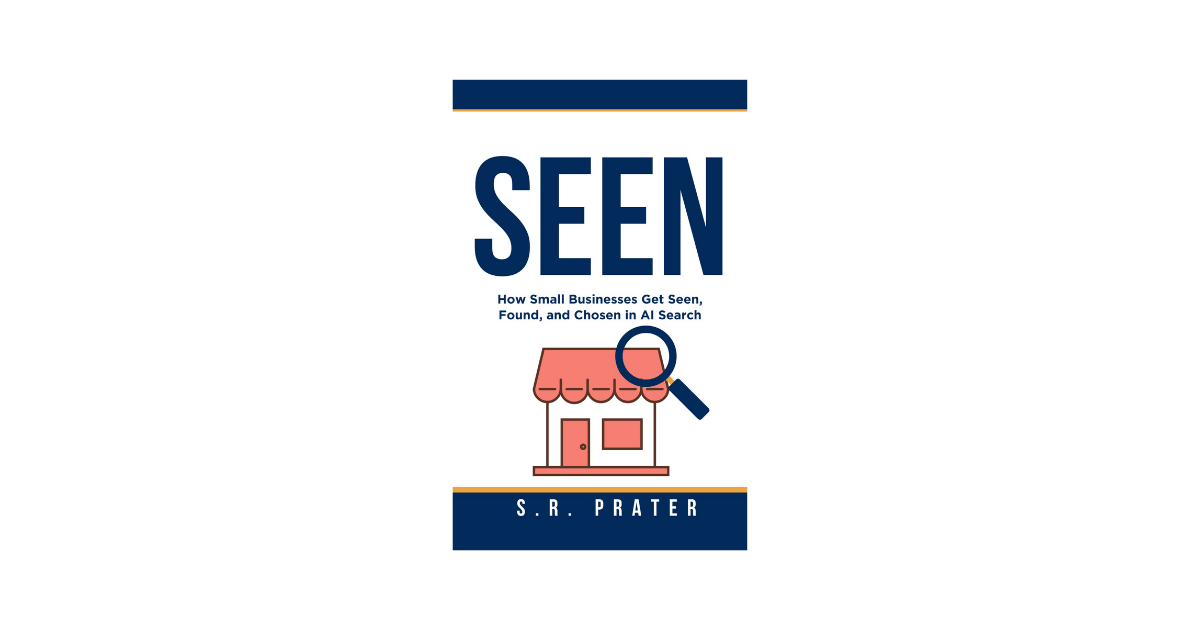
This is part of a 5-day series on AI visibility for small businesses. Want the full picture? SEEN: How Small Businesses Get Seen, Found, and Chosen in AI Search walks you through everything you need to know. #AIsearch #AIvisibility #smallbusinesswebsite
#dowebsitesstillmatter #AIandcontent #websitestrategy #AIknowledgesource #SEOvsAI